Saturday, 9 March 2013

Evaluation


Matt Smith – Photo Skills B Evaluation

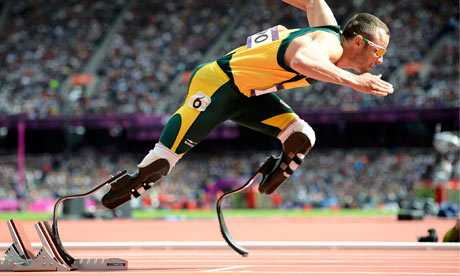
My initial ideas for this project were a little vague. I was unsure what to focus on but I was finally intrigued by a news story about a Para Olympian allowed to compete in the normal Olympics despite being a double amputee with mechanical limbs. When developing my idea I was still unsure of a final outcome and I talked about creating a panoramic image with several models in all having been manipulated in some way by having a limb replaced with a mechanical part and the theme would be sports. I decided against this in the end as I felt a single portrait would be more suited as I felt the focus might get lost amongst the business of a multi-person shot.

When I got this project I wasn’t excited or motivated by it, I thought it was pointless but in hindsight it got me thinking a bit more about composite images as a whole. I always try not to manipulate my images apart from exposure changes. I have always seen manipulation of my personal work as cheating or fake but having thought about it most photographers working today work heavily alongside Photoshop and that’s the benefit of digital photography. I would like to continue to think about how I can use manipulation in personal and up coming projects to enhance my ideas and final outcomes. Photoshop is a powerful tool if used right and this brief has helped me re-realise that.

I found it quite hard to research and get inspired for this project, every search for ‘cyborg’ seemed to bring up terminator related images or images of that nature which I wanted to stay away from since the first day. However I managed to use photographers I was already aware of and some new research to see how digital manipulation and composites can make up an image to combine several ideas into one. It was nice to have the freedom in this project to express our ideas and not be constrained to using certain techniques, which is why I chose to shoot with a wider lens than I normally would for a portrait. The sigma 10-20mm isn’t generally a flattering lens for portraits as it drags out features and either squashes people or stretches them out but since the key focus of this project was something a little out of the ordinary I wasn’t as bothered about getting a textbook portrait and I think this has helped add a unique perspective to my final image which I wouldn’t have got if I had gone with my original play of shooting at 30mm.

I’m happy with my final outcome. I made the mistake of not backing up my original images, which left me needing to go out and re shoot and on the second time I was much more direct with what I wanted. I had already edited my original images so I knew what to avoid making life easier in post. I decided to include a football net in my final shot to add to the sports theme and also distract from the background elements that were somewhat unrelated. I am glad I decided to push myself to add the hologram style effect to my images and I think this helps make my ideas more literal. Originally I was going for subtle editing but this felt like the easy option when push came to shove I decided to experiment a little more than I usually would and I’m happy with the results. 

Friday, 1 March 2013

Source Images

For my final composite I have used a few images I sourced online, I would have liked to have used all my own images but this wasn't possible due to need some specific things. If I had taken the photos myself I would have had much more control over exposure, angles and resolution etc but I have managed to find good resolution photos for my final composite.

A late addition was the technical drawings, I discovered these by accident and decided they would be a perfect addition to my final piece filling some empty background space while continuing on the theme of mechanics and technology.


Editing


When editing my final image I only had a slight idea of the look I was going for. The majority of it was trial and error seeing what worked and what didn't. Too my dismay I used images I found online due to not having access to the parts I wanted. I decided to replace my models leg with a coilover suspension unit from a car. This is an aftermarket part found on racing cars as it lets you adjust the height of the suspension as well as the dampening rate. I thought this would be a great asset to a footballer letting you jump higher and run faster!

This was pretty much the only object I wanted to replace I had always wanted to focus on subtle changes rather than creating a fully mechanical person. While searching for components to use I came across 'technical drawings'. I thought these would be perfect background elements to bring a little more to my images. They are like mechanical blueprints for objects and show the breakdown of parts needed to create them and the order they are used. They are a very visual element to the engineering process and I thought they would be a nice addition to my image.

I decided to try and give my final a 'prototype' feel. This idea was inspired by the inclusion of the technical drawing. I thought it might be nice to create an image that looked as if it were a computer render of an 'improved athlete'. When I had placed the technical drawings in I was happy with the image but it looked quite bare on either side of the model and I found the background was a little overpowering. I decided that I was going to add to the render/future element by creating hologram versions of my model.


After completing all my manipulation I focused my efforts on editing the photo so that I was happy with the colour, exposure contrast etc. Anything that needed changing was done so using adjustment layers so that I could edit and tweak along the way as adjustment layers and masks are non destructive so if I decided I didn't like it I could easily remove it and revert to the original image.


Thursday, 28 February 2013

Erik Johansson

Erik Johansson is a swedish photographer I've been following for some time since a research project in college. He creates amazing surreal composites of everyday scenes with quirky twists and executes them perfectly. Some of my favourite work below:


His work is always flawless and very memorable, something which is hard to do right when combining photography and manipulation so heavily. It's definitely food for thought when thinking about my own personal boundaries with photoshop. My final image will be no where near as technical as Johanssons work but hopefully the editing will be seamless into the photo and not stick out like a sore thumb!

http://erikjohanssonphoto.com/

Thursday, 21 February 2013

Photoshoot

Technical Decisions:

I decided to shoot outdoors to use available light to keep things simple. The reason I wanted to shoot outdoors and not in a studio was based around the idea of not wanting to be too conceptual with my final image. I wanted there to be obvious clues in the background as to what my subject was involved in and I think this is clearly shown in the photos below.

As far as equipment I chose to shoot with a wide angle (10-20mm) lens and all the below shots were at 10mm. The reason for this was to exaggerate the size of the model and fit as much as possible in frame. The lens stretches perspective without distorting lines unlike a fisheye. It provides nice colour and contrast which was perfect for such an overcast day.

I chose to place my subject against a simple background so that he would stand out and the red kit he is wearing aids this. I think If there were distracting background elements the attention would be pulled away from the centre of the frame which could leave the viewer wondering more about the location than the subject.

I was shooting wide open which is f4, i chose a high shutter speed of 1/200 to eliminate camera shake as I was shooting handheld and found iso 200 gave a good enough exposure with just ambient light. Looking back on some of the shots I think they may have been slightly overexposed and I would have benefitted from a polarising filter due to the sky being quite bright. This would have allowed me to expose for the foreground and capture detail in the sky. 


I also experimented slightly with off camera flash. I used wireless remote triggers and a speedlight set to manual power. I had a diffuser on the end as I didn't want any harsh shadows being cast, the flash was set to half power off and was pretty direct. I used it to try and lift the shadows from under the chin and generally brighten the models face up:

No Flash


With Fill Flash


I actually decided against using the flash for my final shot as I felt it washed out some of the colours and seemed to make the model sit above the background which isn't what I was looking for in my final shot. However I was happy to experiment but for this project it just didn't work for me. I think if I was shooting towards sunset/dusk off camera flash would benefit me a lot more and this is something to bear in mind for the future.

Thursday, 14 February 2013

Project Proposal

So I've now finally settled on an idea for my composite image. I'm still not 100% sure on how the outcome will look but I have a tutorial with david coming up in which I can talk some ideas over with him and see if he can provide any input.


"Matt Smith

Project Proposal – Cyborg

For this project I want to create a final image that has some concept behind it. I am well versed in photoshop so I’m trying to push myself with my ideas as I feel competent enough that I can create a composite image easily enough using photoshop.

My initial idea was sparked by an Olympic athlete heavily featured in the media. Oscar Pistorius has been a double leg amputee for his entire life but went on to become a successful sprint runner and ran in the London 2012 Olympics last alongside non-amputee athletes. There was a debate about whether his prosthetic limbs provided him with an advantage over the other runners because he has mechanical legs. He was allowed to compete but some of the other runners were not happy with the decision. I then began to think about if someone having human limbs replaced with mechanical/prosthetic limbs is more able than someone with normal human limbs. How far can this be pushed before someone is more mechanical than human? Thus leading to my inspiration for this project.

Is the perfect human even human at all? I’m looking at this in an athletic/fitness aspect and while I don’t think there is an answer I think it would be interesting to create a composite image where a group of athletes are given tools to make them the best at there sports. How far could it go before we have robots competing against each other in the next Olympics. My final shot will consist of 2/3 different people within the frame all aimed towards a certain sport. I will then use photoshop to manipulate them and add/remove limbs and replace them with elements that would allow them to excel at their chosen sport eg. A tennis player could have a tennis racket for an arm with a ball dispenser attached.

I will try as much as possible to make all the images my own and I think this is achievable as I will be using standard sporting equipment and models, the rest will be done in photoshop."

Tuesday, 12 February 2013

Initial Techniques

Although I feel I'm well versed in photoshop I think the workshops have been a great chance to refresh my knowledge and pick up a few tips and pointers from John. I personally love using shortcuts in photoshop and these workshops have helped me pick up a few new one's which will speed up my workflow.

As far as ideas go I'm still pretty open ended, I've decided I want to do something around sports or athletes and try and steer away from obvious manipulation techniques such as circuits, wires etc and focus on mechanical changes to someone to improve performance in some way.

I've decided to do some research into superhuman specimens and I've been quite lucky in finding a particular news story about an Athlete called 'Oscar Pistorius' who was heavily featured in the media during the 2012 Olympics. Pistorius has been a double leg amputee for his entire life but went on to become a successful sprint runner and ran in the London 2012 Olympics last alongside non-amputee athletes. There was a debate about whether his prosthetic limbs provided him with an advantage over the other runners because he h. He was allowed to compete but some of the other runners were not happy with the decision. I then began to think about if someone having human limbs replaced with mechanical/prosthetic limbs is more able than someone with normal human limbs. How far can this be pushed before someone is more mechanical then human? Thus leading to my inspiration for this project.

I want to create a composite of an athlete who has a limb/limbs removed and replace with mechanical parts. I don't want to replace it with an already existing prosthetic leg design I want to use objects that I feel would improve there abilities in one way or another.


Monday, 4 February 2013

Briefing

For this project we've been asked to create a composite image of a cyborg. What is a cyborg? I suppose this is the first question I have to ask myself!
A quick search turned up this dictionary definition:
"Noun
A fictional or hypothetical person whose physical abilities become superhuman by mechanical elements built into the body."

I feel this definition can be interpreted differently by many people, I personally think of a terminator/irobot combination when I hear the word 'cyborg' however I'm keen to look deeper into it and find my own ideas. I think creating a composite image will be a good challenge. Finding the balance between original image/manipulation will be key in having a final image I'm happy with. After all I don't wan't to create anything too cheesy or futuristic as that isn't where my interests lie.